


Delta Panel Technology
Patent PendingUL-RF-J Protection in 4 Inches
Delta Panel is a lightweight ballistic concrete panel system validated to UL 752 UL-RF-J, the designation for the most demanding rifle threats including .50 BMG (formerly called Level 10). It installs with standard concrete-panel rigging, works with existing building codes, and costs less than comparable ceramic solutions.
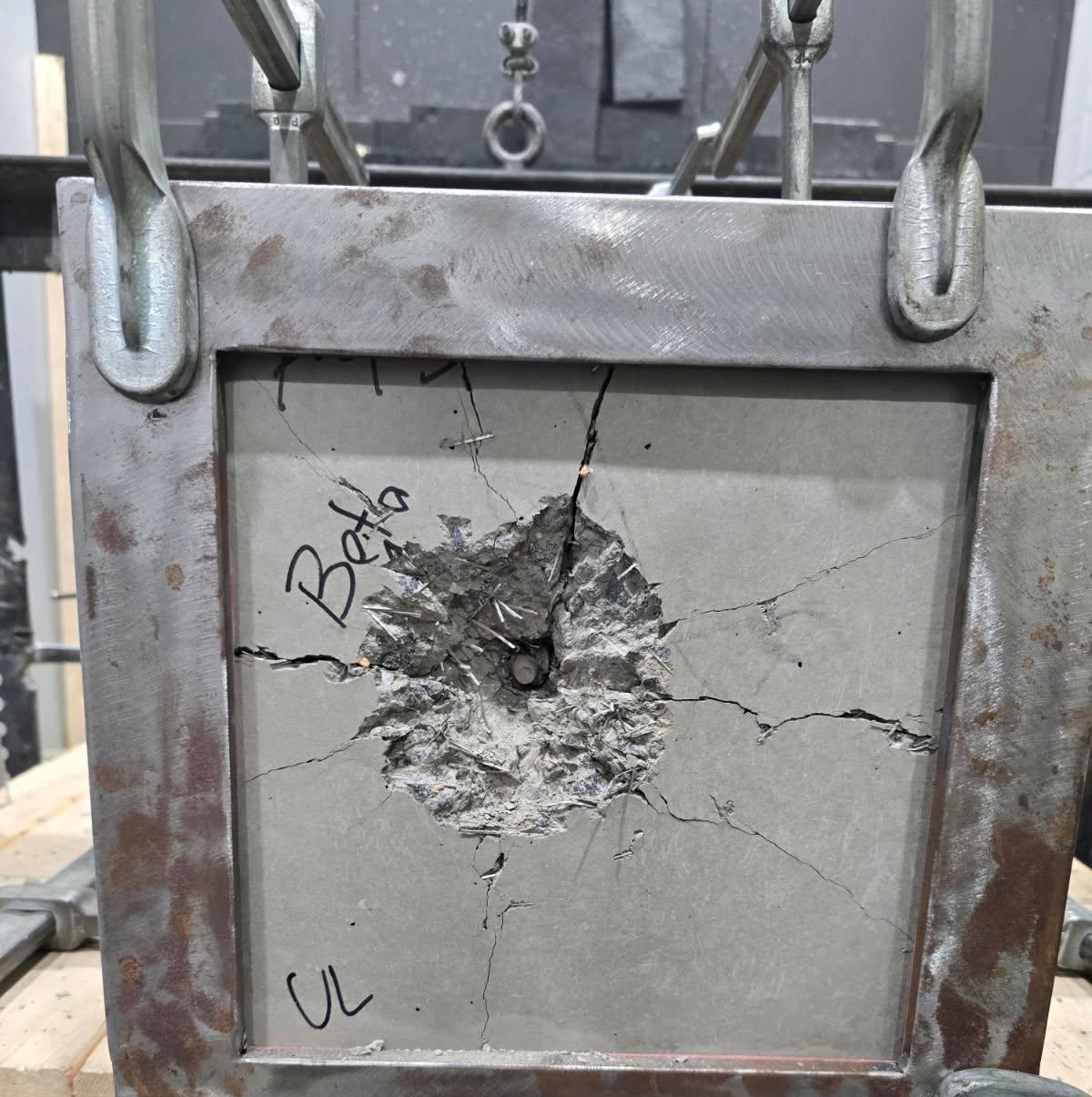
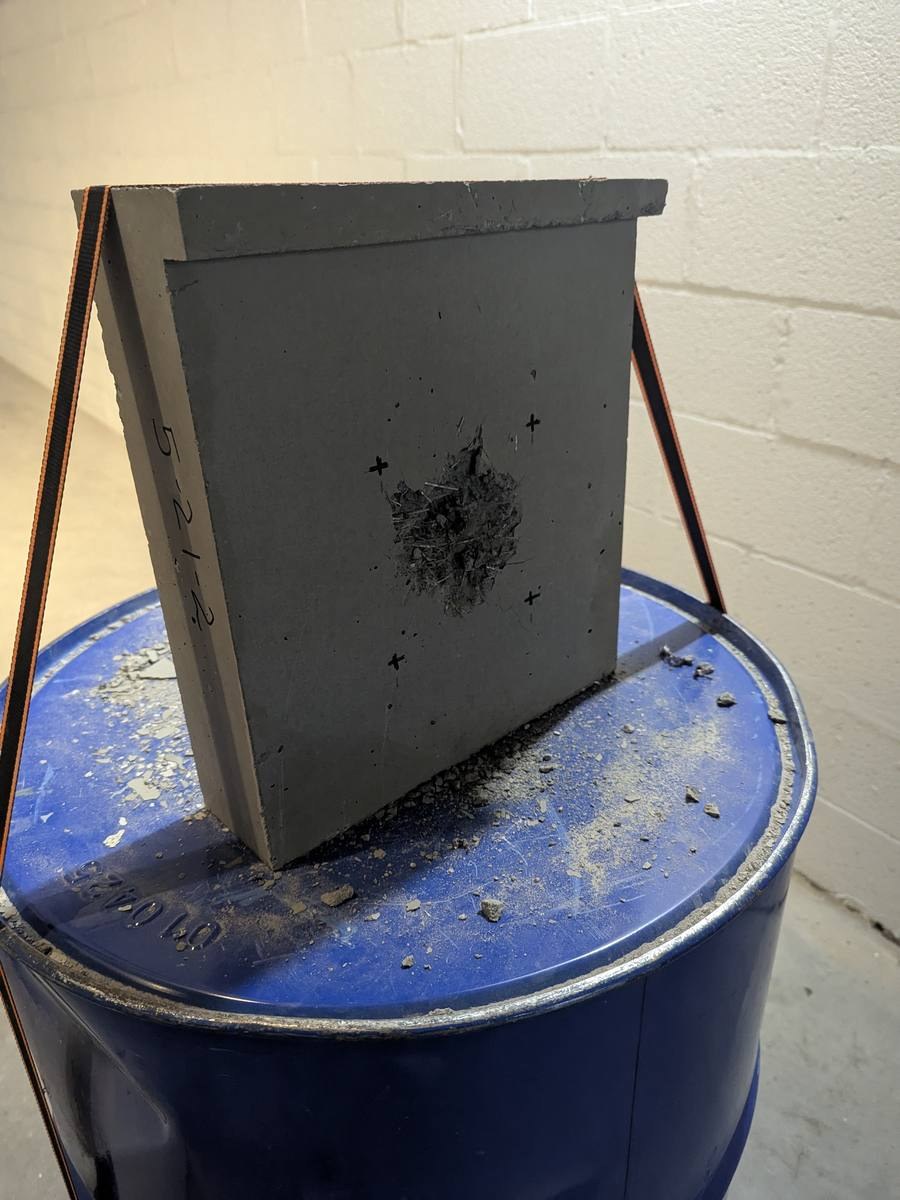

.50 BMG · UL 752 Level 10
The round is still in the 4-inch face. No exit.
4"
Panel Thickness
UL-RF-J
UL 752 · Formerly Level 10
.50 Cal
Threat Rated
Standard
Concrete-Panel Rigging
Certification
UL 752 UL-RF-J: Rated for .50 BMG
UL-RF-J is the UL 752 designation for the most demanding rifle threats, including the .50 caliber BMG round (it was formerly called Level 10). Most ballistic panel products are validated only to UL-RF-D (formerly Level 5). Reaching UL-RF-J took a different material approach, not a thicker version of the same one.
UL-RF-H (formerly Level 8) covers the 7.62×51mm M80 NATO round, the standard military battle-rifle and machine-gun cartridge. The Delta Panel is validated at this level as well, so a single panel stops both sustained military rifle fire and the far heavier .50 BMG threat above it.
Third-Party Verified
Every production batch links to certified ballistic test records under UL Standard 752 Revision 12.
Full Traceability
Test documentation available on request.
Validated to UL-RF-J
Current classification under UL 752 Revision 12, covering the .50 BMG round.
UL 752 Designations
Current UL 752 nomenclature (Table 11.2, Rifle). The standard lists no hierarchy of threat severity; designations describe the validated round, not a tier ranking.
| Designation | Formerly | Ammunition | Velocity | Energy |
|---|---|---|---|---|
| UL-RF-D | Level 5 | .270 Win Soft Point | 3,100 fps | 2,766 ft·lb |
| UL-RF-E | Level 6 | 5.56 M193 | 3,390 fps | 1,416 ft·lb |
| UL-RF-F | Level 7 | 5.56 M855 | 3,190 fps | 1,393 ft·lb |
| UL-RF-G | Level 7 | 7.62×39 Type 56 MSC | 2,480 fps | 1,694 ft·lb |
| UL-RF-H | Level 8 | 7.62×51mm M80 NATO | 2,780 fps | 2,566 ft·lb |
| UL-RF-I | Level 9 | .30 Cal M2 AP | 2,880 fps | 3,070 ft·lb |
| UL-RF-J | Level 10 | .50 BMG M33 Ball | 2,910 fps | 12,389 ft·lb |
The Delta Panel is validated against UL-RF-H (7.62 NATO, formerly Level 8) and UL-RF-J (.50 BMG, formerly Level 10) as a concrete composite that a standard construction crew can install with concrete-panel rigging. No custom steel plate fabrication.
Solutions
One Panel, Deployed Any of Five Ways
The same Delta Panel goes in as a rapid-deploy shelter, a permanent structural wall, a standalone barrier, or retrofit cladding on an existing structure. Most projects start from custom engineering: we design the panel, frame, and rating around your site and threat.

Modular Shelters
Rapid-deploy personnel shelters, guard posts, and hardened observation positions. Pre-engineered panel kits ship ready for field assembly.

Structural Walls
Load-bearing ballistic wall systems for permanent installation. Engineered to integrate with existing structural frameworks and building codes.

Standalone Barriers
Free-standing perimeter panels and vehicle barriers. No foundation required for temporary or rapid deployment scenarios.

Retrofit Cladding
Panel overlay systems that upgrade existing concrete, CMU, or steel-frame structures to UL-RF-J (formerly Level 10) without demolition.

Custom Engineering
Our default. Every project is engineered to spec: panel geometry, structural frame, and threat profile are designed for your site.
Applications
Built for High-Consequence Sites
Delta Panel is designed for military installations, electrical substations, data centers, embassies, bank vaults, and ammunition bunkers. Any site where a rifle-grade threat is in scope.

Military & Defense
Perimeter walls, guard posts, command centers, and access control points at active installations and forward-operating positions.

Critical Infrastructure
Electrical substations, grid switching stations, and data centers defended against rifle-grade threats without excessive seismic mass.

Law Enforcement
Command posts, entry control points, armored vehicle depots, and detention perimeter walls meeting certified high-caliber standards.

Government & Diplomatic
Embassy compounds and secure government facilities requiring UL 752 UL-RF-J (formerly Level 10) certification for diplomatic-grade security.

Financial Security
Vault walls, secure corridors, and bullion storage with high-caliber protection that integrates with existing architecture.

Storage & Bunkers
Ammunition depots and hardened bunker walls that absorb kinetic energy while remaining field-repairable following impact.
Technology
How the Panel Works
The panel is a dense composite, not a steel plate in disguise. Impact energy is absorbed locally and dispersed across the matrix.

Ballistic Impact
Localized damage absorption without through-penetration

Panel Cross-Section
Dense composite matrix throughout the panel

Manufacturing
Precision casting in engineered steel mold systems

Connection Hardware
Heavy-duty galvanized steel brackets and fasteners
Advantages
Why Delta Panel Over Legacy Systems
Traditional ballistic protection means heavy steel plates, complex engineering, and crane lifts. Delta Panel Technology eliminates those constraints.
Material
Lightweight concrete
vs
Steel / ceramic
A concrete composite, not a steel plate or a ceramic tile, fabricated at panel scale with standard construction finishes. The all-concrete build applies to the Level 4 and Level 8 ratings.
Installation
Standard rigging
vs
Custom steel + crane
Lightweight aggregate keeps panels in the standard concrete-panel rigging window. No custom steel-plate fabrication, no specialized lift equipment.
Procurement
Lower cost
vs
Premium ceramic
Ceramic UL-RF-J (formerly Level 10) solutions are expensive to purchase and integrate. Delta Panel delivers the same threat rating at concrete economics.
After Impact
Patch on-site
vs
Full replacement
Damaged panels are repairable in place with patch compound. No removal, no full-wall demolition and rebuild.
Code Compliance
Drop-in to code
vs
Custom engineering
Integrates with existing building codes and structural frameworks. No custom structural engineering workaround.

Validated to UL 752 UL-RF-J · .50 BMG
Documented and third-party verified.
Discuss your protection requirements
Tell us about your project. Send us your site dimensions, the threat you are protecting against, and your timeline, and an engineer will scope a solution with you.